How much time should a host budget for a full turnover of a two-bedroom rental?
Everyone wants a single number. Here is how to build a realistic estimate for your own unit, why it drifts, and what to do when the window is shorter than the estimate.
Start from the tasks, not from a rule of thumb
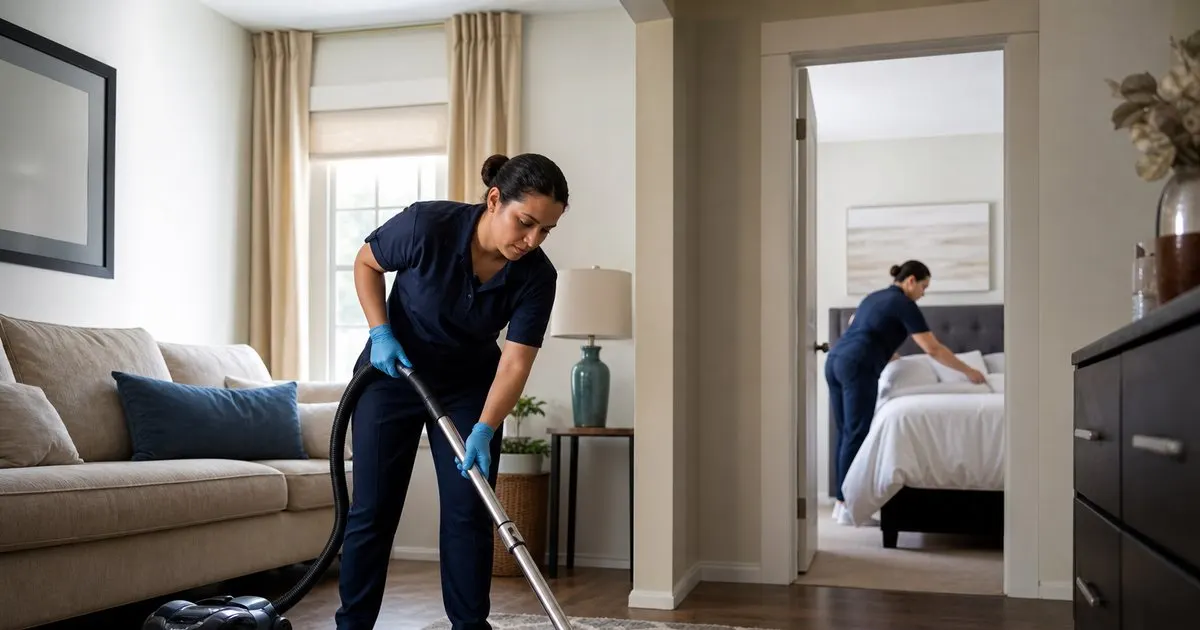
A two-bedroom turnover for a single cleaner working alone typically lands somewhere between two and four hours, with the wide spread explained almost entirely by what the unit contains and how the last guest left it. Two bedrooms, one bathroom, no laundry on site, and a tidy departing couple sits at the bottom of that range. Two bedrooms, two bathrooms, in-unit laundry that the cleaner runs, a hot tub, and a family of five that cooked every night sits at the top or beyond it. The number of bedrooms is a poor predictor on its own. Related: Working Well With Your Cleaning Team
The honest way to estimate is to time the components. Bed stripping and remaking, bathroom cleaning, kitchen and appliances, floors, dusting and surfaces, restocking, trash and recycling, and a final walkthrough each take a fairly stable amount of time in a given unit once the cleaner knows it. Ask the cleaner to time each block for the first three or four turnovers. You will end up with a number that belongs to your unit rather than to an internet average, and you will know which block to attack if the total is too long.
Keep reading: Why a Missed Turnover Is Worse Than a Bad Review, Building a Cleaning Schedule From Your Bookings, Same Day Turnovers: Managing the Tight Window. See how FlipTidy helps you short-let cleaning turnover scheduler synced to bookings.
Account for the things that are not cleaning
A turnover is longer than the cleaning inside it. Add travel to and from the unit, parking, carrying linen and supplies in, laundry cycles if they happen on site, photographing and reporting, and the occasional wait for a guest who is still packing at 11:15. In-unit laundry deserves special attention, because a wash and dry cycle for a full set of sheets and towels can easily exceed an hour, and a cleaner who has to wait for the dryer before making the bed is not cleaning during that wait unless the sequence is planned. Related: Why a Missed Turnover Is Worse Than a Bad Review
Sequence matters more than speed. Starting the laundry first, then cleaning bathrooms and kitchen while it runs, then making beds last with the dried linen, keeps the cleaner working the whole time. Starting with the beds and then discovering the clean set is in the dryer costs an hour. If the unit relies on in-unit laundry, keeping a spare clean set on site removes that dependency entirely and is usually the single biggest time saver available.
Build the schedule with slack you can see
Once you have a realistic estimate, compare it to the window between checkout and check-in. If the estimate is three hours and the window is five, you have room for a late guest, a broken vacuum, or a cleaner arriving from another unit. If the estimate is three hours and the window is three, you have a plan that only works when nothing goes wrong. Some hosts respond by moving checkout earlier or check-in later. Others accept the tight window on some days and stack a second cleaner for those turnovers. Related: Same Day Turnovers: Managing the Tight Window
The mistake is hiding the tight days inside a general schedule. A cleaner should be able to see that Friday's turnover at unit B has no slack, so they plan to arrive at checkout time exactly and skip the coffee stop.A scheduler that shows the checkout time, the check-in time, and your estimate side by side makes tight windows visible before they become a problem. Related: Building a Cleaning Schedule From Your Bookings
Re-estimate when the unit changes
Estimates drift. Adding a bunk bed, allowing pets, installing a hot tub, or moving from a couples market to a family market all change the turnover time and rarely get reflected in the schedule. The symptom is a cleaner who is always slightly late and a host who thinks the cleaner has gotten slow. Re-time the components after any change to the unit, the guest mix, or the checklist, and update the estimate you plan against.
Also watch the difference between the best case and the usual case. A cleaner may be able to finish in two hours when everything is perfect, but if the last six turnovers averaged closer to three, plan for three. Scheduling on the best case guarantees that the bad days become emergencies. Scheduling on the usual case, with visible slack on top, means the bad days are just slower Tuesdays.
- A two-bedroom turnover for one cleaner typically runs two to four hours, and bedrooms alone are a poor predictor of where in that range a unit falls.
- Time each component for the first few turnovers to get an estimate that belongs to your unit rather than an average.
- Count travel, laundry cycles, photos, and late guests as part of the turnover, and sequence laundry so the cleaner never waits on a dryer.
- Plan on the usual case with visible slack, and re-time the job whenever the unit, guest mix, or checklist changes.

Julien Jimenez
Julien Jimenez is an independent software builder based in Paris. He designs, ships, and operates focused SaaS products for small businesses and independent professionals. Read the full author page.
Every checkout cleaned, without the group chat
Short-let cleaning turnover scheduler synced to bookings. FlipTidy is built to help you put this into practice.
Schedule turnoversMore from the FlipTidy blog

Why a Missed Turnover Is Worse Than a Bad Review

Building a Cleaning Schedule From Your Bookings

Same Day Turnovers: Managing the Tight Window
Get the FlipTidy playbook
Practical guides on turnover scheduling, straight to your inbox as we publish them. No spam, unsubscribe any time.