When should a short-term rental host schedule a deep clean instead of a standard turnover?
Standard turnovers keep a unit presentable. Deep cleans keep it from slowly declining. Here is how to decide which one a given gap on the calendar deserves.
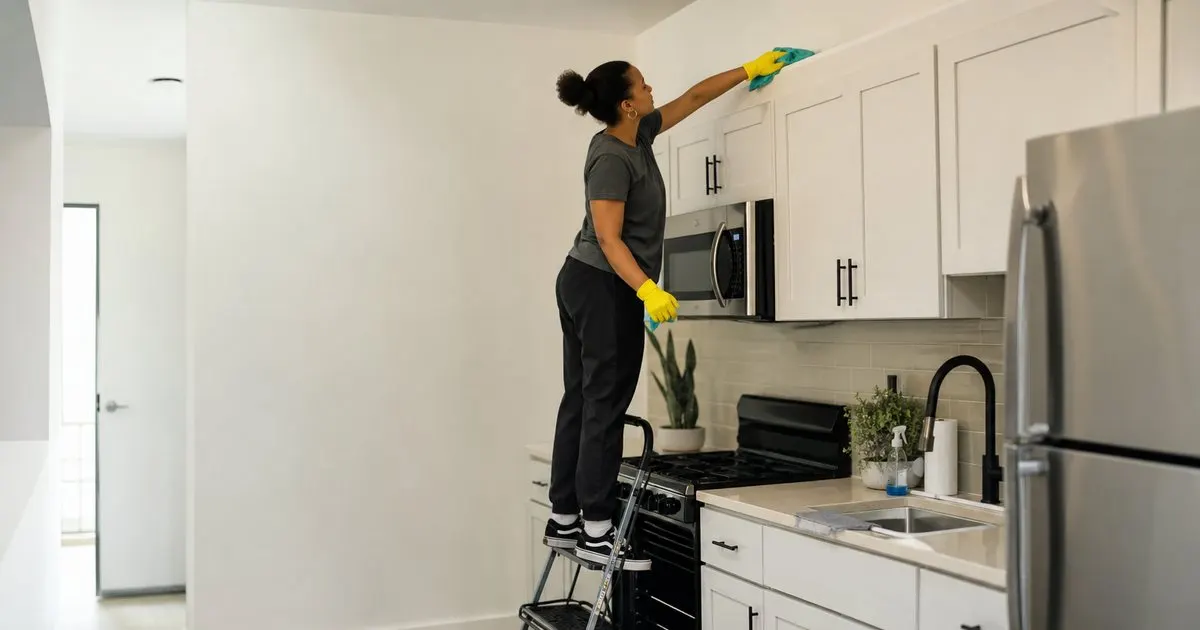
Know what a standard turnover is not doing
A standard turnover is designed for speed and consistency: strip and remake beds, clean bathrooms and kitchen surfaces, vacuum and mop, restock, and reset. It is not designed to move furniture, pull out the refrigerator, wash walls, descale showerheads, launder curtains, or clean the inside of the oven. Those tasks take time a turnover window does not have, and any cleaner who tries to fit them in is either rushing the basics or quietly skipping them.
The result is a slow accumulation. Dust behind the headboard, a film on the top of the fridge, grout that has shifted from white to beige. None of it fails a guest on day one, but all of it shows up in photos and reviews eventually, usually as vague comments about the place feeling tired. The deep clean exists to reset that accumulation on purpose, before a guest does it for you in a review. One item does not belong on that cosmetic list: a dryer vent full of lint is a fire hazard, not a sign of a tired unit, so have it cleared on its own fixed schedule rather than waiting for a deep clean to catch it. Related: Why a Missed Turnover Is Worse Than a Bad Review
Keep reading: Why a Missed Turnover Is Worse Than a Bad Review, Building a Cleaning Schedule From Your Bookings, Same Day Turnovers: Managing the Tight Window. See how FlipTidy helps you short-let cleaning turnover scheduler synced to bookings.
Trigger deep cleans by turnover count and by event
The most reliable schedule is based on how many stays the unit has hosted, not on the calendar alone. A unit with back-to-back weekend bookings accumulates wear far faster than one rented a week a month. Many operators land on a deep clean somewhere in the range of every ten to twenty turnovers for busy units, with a full seasonal deep clean at least a couple of times a year regardless. Your own number will depend on the unit, guest type, and whether pets are allowed, so start with a count and adjust after you see what the cleaner finds. Related: Building a Cleaning Schedule From Your Bookings
On top of the count, certain events should trigger a deep clean immediately: a long stay of several weeks, a group booking, a stay with pets, a guest who cooked heavily, a smoke smell, or any damage report. After events like these, a standard turnover is not enough to restore the unit to baseline, and the next guest is the one who will notice. Your booking data already tells you the length of stay and the guest count. Use that to flag the next available gap.
Find the gap before you book it away
A deep clean typically needs a much longer window than a turnover, often the better part of a day for a larger unit. That window has to come from somewhere, which means either blocking a night on the calendar or using a gap that already exists. Scanning the next several weeks for two-night gaps and reserving one of them for the deep clean is far cheaper than blocking a paid night in peak season. This is one place where a scheduler that shows your booking gaps next to your cleaning assignments earns its keep. Related: Same Day Turnovers: Managing the Tight Window
Communicate the deep clean as a separate job with its own checklist and its own pay. A cleaner asked to "do a really thorough turnover" will do a slightly slower turnover. A cleaner given a deep clean checklist, a full day, and a deep clean rate will move the furniture. Keep the two checklists physically separate so nobody is guessing which one applies. Related: Checklists That Keep Turnovers Consistent
Use the deep clean as an inspection, not just a scrub
The person doing a deep clean sees everything: the loose cabinet hinge, the water stain under the sink, the mattress that needs flipping, the smoke detector with a dead battery, the window that no longer latches. Ask them to write it all down, with photos, as part of the job. That list is your maintenance backlog for the next month, and it is the cheapest property inspection you will ever get.
Then close the loop. Review the list, schedule the repairs, and note the date of the deep clean against the unit so the next one can be planned. Hosts who do this find that the standard turnovers also get easier, because the baseline is higher and the cleaner is not fighting accumulated grime to reach clean. A deep clean is not an expense you incur when things get bad. It is the reason things do not get bad.
- A standard turnover resets the surface; a deep clean resets the accumulation behind furniture, inside appliances, and in grout.
- Trigger deep cleans by turnover count and by events such as long stays, pets, groups, or damage, not by the calendar alone.
- Reserve an existing two-night gap for the deep clean rather than blocking a paid night, and give it its own checklist and rate.
- Treat every deep clean as a property inspection and turn the cleaner's findings into next month's maintenance list.

Julien Jimenez
Julien Jimenez is an independent software builder based in Paris. He designs, ships, and operates focused SaaS products for small businesses and independent professionals. Read the full author page.
Every checkout cleaned, without the group chat
Short-let cleaning turnover scheduler synced to bookings. FlipTidy is built to help you put this into practice.
Schedule turnoversMore from the FlipTidy blog

Why a Missed Turnover Is Worse Than a Bad Review

Building a Cleaning Schedule From Your Bookings
Same Day Turnovers: Managing the Tight Window
Get the FlipTidy playbook
Practical guides on turnover scheduling, straight to your inbox as we publish them. No spam, unsubscribe any time.