How do you keep consumables stocked across turnovers without overbuying or running out?
Toilet paper, coffee, dish soap, and trash bags cause more guest messages than any appliance. A simple par-level system ends most of them.
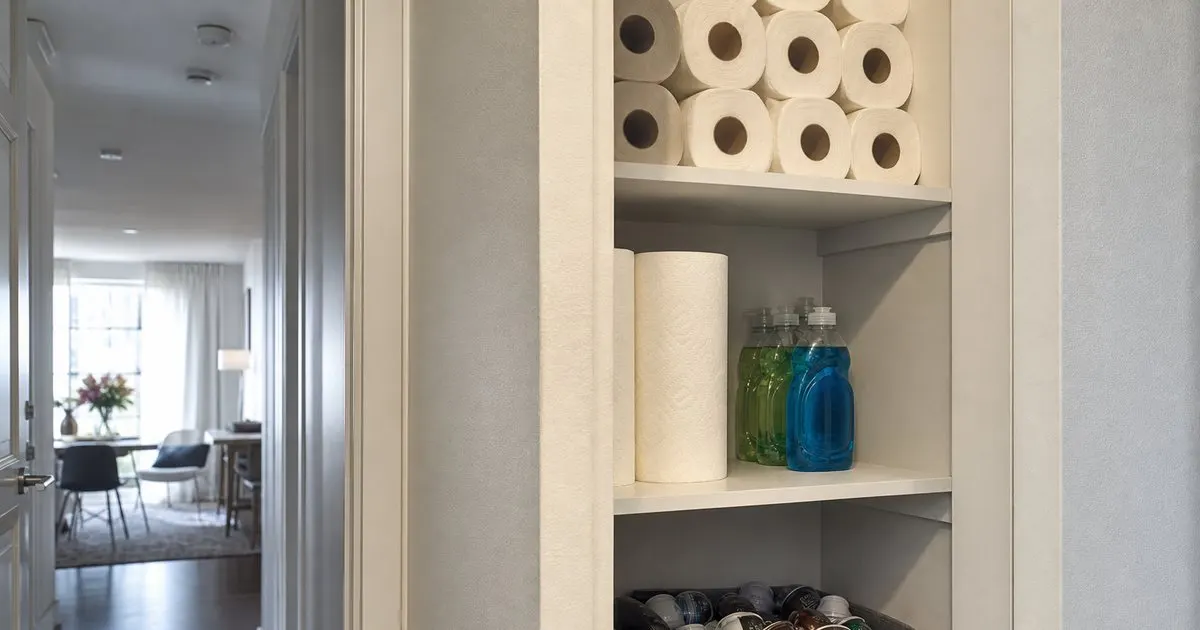
Set a par level for every item, per unit
A par level is the quantity that should be in the unit when a guest arrives. Four rolls of toilet paper per bathroom, two trash bags per can plus the one in it, a dozen coffee pods, a full bottle of dish soap, and so on. Once every item has a number, restocking stops being a judgment call. The cleaner does not decide whether three rolls is enough. The checklist says four, so they bring it to four. Write the par next to the item on the checklist so the number and the task are never separated. Related: The Cost of a Dirty Unit at Check In
The par should scale with the stay, not stay fixed. A two-night couple and a seven-night family of six do not need the same toilet paper, and a cleaner restocking to a fixed par for a long stay guarantees a message on night four. Some hosts set two pars, one for short stays and one for long, and let the booking length pick the number. A scheduler that shows the cleaner the length of the next stay, as FlipTidy does, makes that a glance rather than a calculation.
Keep reading: Why a Missed Turnover Is Worse Than a Bad Review, Building a Cleaning Schedule From Your Bookings, Same Day Turnovers: Managing the Tight Window. See how FlipTidy helps you short-let cleaning turnover scheduler synced to bookings.
Keep the reserve in the unit, not in your car
The unit itself should hold a reserve beyond the par, in a locked owner's closet or a clearly marked storage tote guests do not open. That reserve is what lets the cleaner restock from stock already on site instead of hauling supplies for every turnover. A reserve of two or three turnovers' worth per item is enough for most units, and it means a forgotten supply run does not become a guest problem. The reserve is also what covers a guest who uses more than expected mid-stay. Related: Why a Missed Turnover Is Worse Than a Bad Review
The cleaner's job then splits into two counts: bring the guest-facing par to level, and note when the reserve drops below its own minimum. That second note is the reorder signal. Without it, the reserve quietly hits zero and the next turnover discovers there is no toilet paper anywhere in the building. A single line at the bottom of the checklist, "reserve low on:", filled in by the cleaner, is the entire reorder system for many small operators. Related: Building a Cleaning Schedule From Your Bookings
Buy on a cadence that matches turnover volume
Overbuying and running out are the same mistake from opposite directions: buying on impulse instead of on a count. Once the cleaner is reporting reserve levels, the host can order on a fixed cadence, weekly or biweekly depending on volume, and only for items flagged low. Bulk purchases make sense for fast-moving basics like toilet paper and trash bags. They make less sense for items that expire, take up space, or change with guest preferences, such as coffee or specialty toiletries.
Standardize brands and sizes so the reorder is a repeat. Guests do not care whether the dish soap is the same brand every visit, but the cleaner does, because a different bottle size means a different par and a different shelf. Keep a short master list of exactly what each item is, where it is bought, and the unit price, and refresh the prices once or twice a year. That list is what lets a backup cleaner or a new co-host restock correctly without asking.
Watch for the items that are actually guest complaints
Not every consumable matters equally. Toilet paper, paper towels, trash bags, dish soap, and coffee tend to generate the bulk of mid-stay messages, and they are the items a guest cannot easily do without at 10 p.m. Salt, cooking oil, and spare batteries matter far less and can run low without anyone noticing. Set generous pars for the first group and modest ones for the second, and check the first group's par every time even on a rushed turnover. Related: Turnover Quality and Guest Reviews
Then read your guest messages for the pattern. If three guests in a month asked where the extra toilet paper was, the answer is not more toilet paper, it is a visible location or a note in the welcome guide. If guests keep running out of coffee on longer stays, the long-stay par is wrong. Consumables are one of the few parts of hosting where the fix is usually a number, and the guests will tell you which number if you listen.
- Give every consumable a written par level per unit, and use a higher par for longer stays.
- Keep a reserve of two or three turnovers' worth in a locked closet so restocking never depends on a supply run.
- Have the cleaner flag low reserves on the checklist and order on a fixed cadence only for flagged items.
- Prioritize the handful of items that generate real guest messages, and use those messages to correct your pars.

Julien Jimenez
Julien Jimenez is an independent software builder based in Paris. He designs, ships, and operates focused SaaS products for small businesses and independent professionals. Read the full author page.
Every checkout cleaned, without the group chat
Short-let cleaning turnover scheduler synced to bookings. FlipTidy is built to help you put this into practice.
Schedule turnoversMore from the FlipTidy blog

Why a Missed Turnover Is Worse Than a Bad Review

Building a Cleaning Schedule From Your Bookings

Same Day Turnovers: Managing the Tight Window
Get the FlipTidy playbook
Practical guides on turnover scheduling, straight to your inbox as we publish them. No spam, unsubscribe any time.